Friday, July 24, 2026

Monday, July 20, 2026
Hiram Rhodes Revel and Joseph Hayne Rainey
 |
| Hiram Rhodes Revel |
In 1868, Hiram Rhodes Revel became the first African American to join Congress when he took office in the Senate. Ironically, Revel ended up taking the president of the confederacy Jefferson Davis seat. Ultimately, in March of 1871 Hiram Rhodes Revel left the senate to live out the rest of his life as an educator to others then passing away on January 6, 1901.
Thursday, July 16, 2026
MY Strength
On this page I am going to summarize the results of my Clifton Strengths.
1. Context
2. Positivity
3. Harmony
4. Consistency
5. Discipline
MY STORY
Write several paragraphs that gives the reader a fuller picture of you, more personal than the bio blurch.
Monday, July 13, 2026
Gone with the Wind
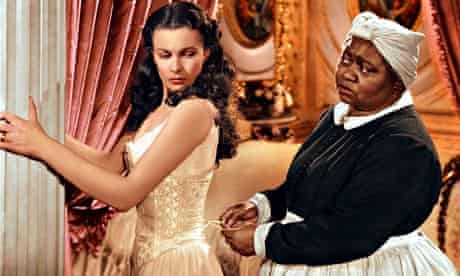 |
| Scarlett O'Hara and Mammy |
Friday, July 10, 2026
EOTO 1 Thoughts

The Amistad rebellion of 1839 is a righteous story of how 53 kidnapped Africans fought back against the men who illegally trafficked them, seizing control of the ship. Ultimately, they wound up in America as refugees in need of aid. The Spanish government wanted the American government to return the Africans as their rightful property. But controversially despite America having slaves the Supreme Court ruled that the enslaved Africans are free and that they were wrongfully imprisoned on the Amistad. This is interesting as it seems hypocritical for America to deem the slaves as free when back then they had slaves of their own.


The Kansas - Nebraska Act is an important bill as it sets up the foundation for the freedom of my ancestors. The bill sets up the territories of Kansas and Nebraska which in turn repealed the Missouri Compromise. Multiple flocks of people from different states flooded the new territories to determine the state’s status as a free or slave state. The immigration political atmosphere was so bad in Kansas that the event was called “Bleeding Kansas” as multiple people died or were injured.

Reconstruction: America after the Civil War
 |
| Henry Louis based his documentary on his book "The Stoney Road" |
On April 9, 1865, Robert E. Lee surrendered to Ulysses S. Grant at Appomattox. The war was over. So was slavery in the United States.
But the story didn't end there.
Black soldiers had helped win that freedom themselves, fighting to liberate their own brothers and sisters. Just two days after Appomattox, Lincoln announced that Black men should be allowed to vote. Then John Wilkes Booth killed him.
What followed was Reconstruction: America's attempt to answer a question it had never really settled. Who counts as a citizen? Who gets to become one?
The North and South saw this process completely differently.
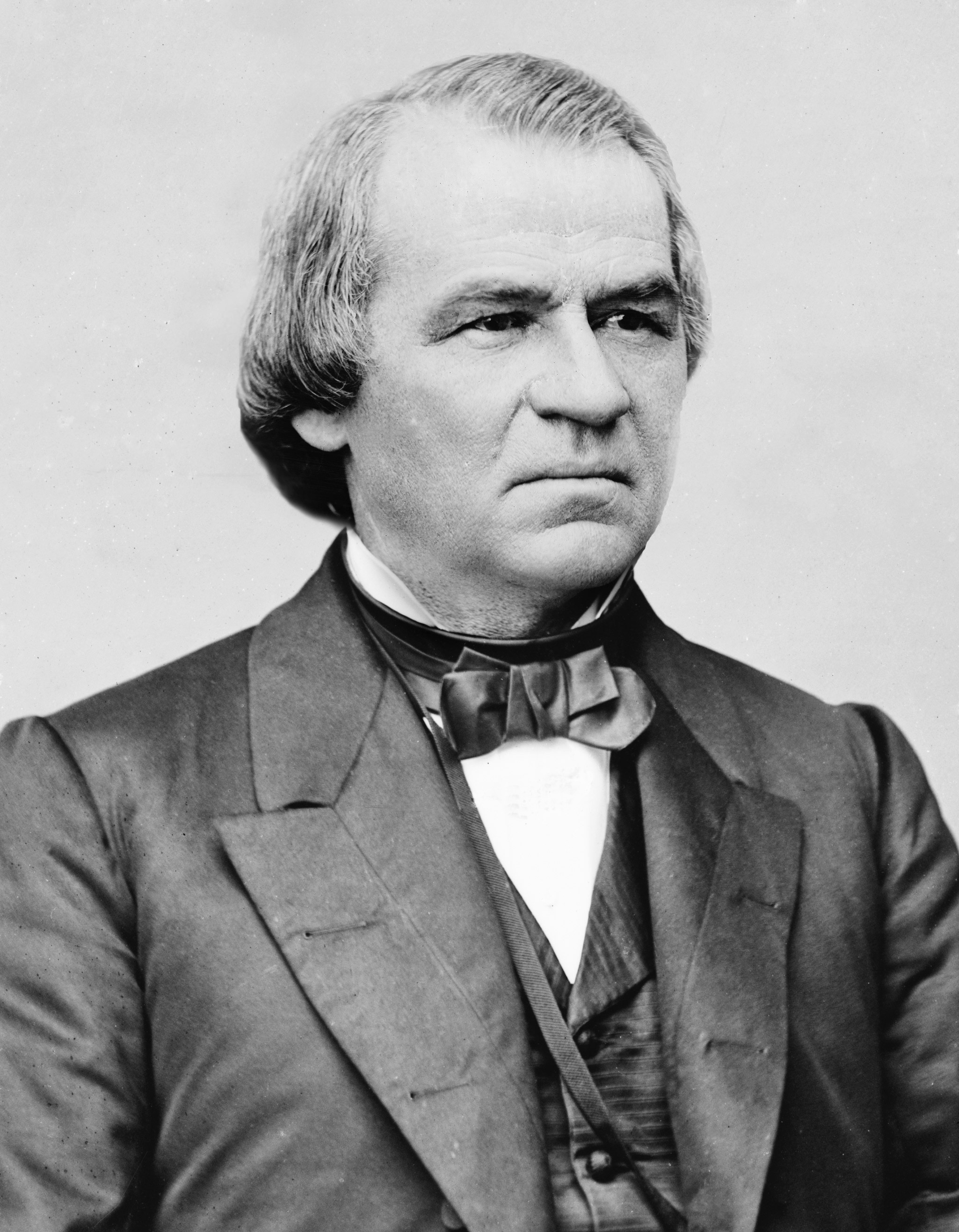
Andrew Johnson became president only because his predecessor was assassinated. I find it interesting that Johnson, a southerner, had actually opposed secession. But Frederick Douglass didn't trust him, calling him "no friend to the Black man." Johnson proved Douglass right, granting amnesty to most white southerners and helping them keep African Americans under control. It felt like a power trip for a man once begged for mercy by people he despised.
The government's failure to redistribute land, the idea of "40 acres and a mule," is a concept I find genuinely compelling and upsetting as the execution failed completely, and Black Americans were left economically dependent for decades.
What moved me most, though, was learning how freed families spent years, sometimes decades, searching for relatives lost to slavery. Which is heartbreaking.
Still, the numbers are staggering. Roughly a thousand Black men held political office during this era. That's incredible considering the black codes, Jim crow laws, and attempts to withhold Black people from politics.
The Ku Klux Klan was founded in Tennessee in 1866. They and other white Americans massacred tons of black soldiers and black people for celebrating their freedom. The backlash was swift and violent.
Yet out of that violence came real change because it led to the Civil Rights Act of 1866, the 14th Amendment, and Black Americans arming themselves to be able to vote in elections.
Reconstruction didn't just rebuild a nation. It revitalized American democracy itself.
AI DISCLOSURE: For this AI-assisted assignment, I used Claude AI to help organize my notes from a documentary into a draft for a blog post. I made sure to tell Claude to not do its own research and how long the blog draft was supposed to be. Even though Claude made the draft to make it sound first person I edited it to be my own words.
Thursday, July 9, 2026
Mock Trial (State V Mann)

May it please the Court.
The facts of this case are not in dispute. In 1828, John Mann hired an enslaved woman named Lydia from her owner, Elizabeth Jones, for a term of one year. During that hiring period, Mann attempted to punish Lydia for a minor offense. As the punishment began, Lydia attempted to flee. Mann called for her to stop. When she did not, he shot her.
Mann was indicted for assault and battery. At trial, Superior Court Judge Daniel instructed the jury that if they found the punishment inflicted was cruel and unwarrantable, and disproportionate to the offense committed, then under the law the Defendant was guilty —particularly because he held only a special property interest in Lydia as a hirer, not as her general owner. The jury applied that standard to the facts and returned a verdict of guilty. The court fined the Defendant five dollars.
John Mann
The State asks this Court to affirm that judgment. Three legal points support affirmance.
Second, the jury instruction below applied a workable and already-recognized legal standard: proportionality. North Carolina law has never held that a master's or hirer's authority over a slave is boundless. The law has long distinguished a master's or hirer's authority from other custodial relationships parent and child, master and apprentice, tutor and scholar each of which carries disciplinary authority bounded by law. There is no legal basis to treat this relationship as the sole exception carrying no limit whatsoever, particularly where the force used was capable of causing death.
Third, the distinction between owner and hirer is legally significant, not incidental. Judge Daniel's charge to the jury rested on this exact point: Mann possessed only a special property interest in Lydia for the duration of the hiring term. Elizabeth Jones, the general owner, retained an ongoing interest in Lydia's life, labor, and physical condition. A hirer who inflicts a wound that could permanently impair or end the life of the hired person destroys value belonging to another party, the general owner beyond any authority the hiring arrangement conveyed.
The State does not ask this Court to declare that a master or hirer has no authority to compel obedience or to administer correction. The State asks only that this Court hold what the trial court already held: that authority has a limit, and that limit is exceeded when the punishment inflicted is cruel, unwarrantable, and disproportionate to the offense and further exceeded when the means employed is a weapon capable of causing death, used against a person attempting only to flee, not to attack.
The jury below heard the evidence and applied exactly that standard. Their verdict should stand.
The State respectfully requests that this Court affirm the judgment of the Superior Court of Chowan County.
AI DISCLOSURE: For this AI-assisted assignment, I used Claude AI to do historical research on my topic. After prompting the tool to do research based only on academic and other high-quality sources, I asked Claude to shape the material in the form of a script for an oral presentation of four minutes. I then asked Claude to shape the material in the form of a blog post of between 500 and 600 words. I edited the AI output for readability. I also policed the linked sources for quality control. To the blog post, I added visual elements and links to sources. I also made sure the paragraphs were short and in a professional style.
Wednesday, July 8, 2026
The Eight Values of free expression
The first amendment is one of the United States assumed novelties as most people in the US don’t think about its importance. Whether you celebrate your religion or write a blog that is the first amendment. Although, there is a more profound meaning to the First Amendment than that.
There are eight definite values that make up free expression bestowed upon us by the first amendment. Of the eight values there are three that are the most important: “Check on Governmental Power”, “Promote Tolerance” and “Promote Innovation”. These are pivotal because it assists in keeping the government under the people’s control, not banning words/messages we take issue with, and keeping a diverse and creative society.

The first important value is “Check on Governmental Power”. This is important because it allows us to criticize the government decisions and keep them from censoring our words. For example during the Biden administration they were accused of pressuring social media companies to censor disfavored views. At the moment, the Trump administration is currently waging war against Iran which has led to public backlash and criticism because of the ethics of the war and inflation. This value allows us to critique the government while holding them accountable for violating their power.

The second important value is “Promote Tolerance”. Promoting Tolerance is important because we need to remember that hate speech is protected under the first amendment. Without this value we would be constantly bickering and unable to progress as a society. Research shows that tolerance can benefit health and improve our relationships with others. Ultimately “Promote Tolerance” is important as it helps us progress as a society by improving our health and relationships with others.

The final important value is “Promote Innovation”. Promoting Innovation is important as it allows creative and diverse expression. Innovation welcomes expressions from any diverse background which helps build a more interesting society. The problem is that creative expression is being suppressed by others by outlawing it in states. Currently a lot of writers are having their books banned in multiple states.
That means tons of writers can share their artistic vision which in turn suppresses one's ability to express themselves which is bad because it means only certain individuals can express themselves or certain types of creative expressions are banned. As a society we need to fundamentally evolve to allow all forms of expression including one we don't agree with as it’s better to denounce expressions than to outright ban it.
To conclude, the first amendment is often overlooked and taken for granted as a right to the American people. Especially because they don’t know the eight core values of expression and the three main ones. Which are “Check on Governmental Power”, “Promote Tolerance” and “Promote Innovation”. These three elements help keep the government in check from abusing their power, better our health and improve our society and allow creative expression without bias or prejudice. Ultimately, we need to acknowledge these values bestowed upon us and use them to create a better society for us and others.
Town Hall Meeting | John Quincy Adams
Friends, neighbors, fellow citizens

I am John Quincy Adams. Some of you know me as the sixth President of these United States. Others know me better as the old man in the House of Representatives who will not sit down and will not be quiet. I was born in Braintree, Massachusetts, in 1767, the son of John and Abigail Adams. I was raised watching my father help build a nation on the promise that all men are created equal. I have spent my life trying to hold this country to that promise and I have watched it break that promise for far too many of its people.
I do not come before you tonight as a man untested by this question. In 1841, at seventy-three years of age, I stood before the Supreme Court of the United States to argue for the freedom of fifty-three Africans men and women who had been seized illegally, sold into bondage, and who fought for their own liberty aboard the ship Amistad. Lawyers half my age advised me it was a fool's errand. I took the case regardless, because I believed then, as I believe now, that no law of nations and no law of man can make a human being into property.
The Court ruled in the captives' favor. When the verdict came, I wrote to my co-counsel that the captives were free, and I told him I wrote to him in great joy. That joy has never left me. Nor has my conviction. In the years since, I have kept a private diary, and in it I confessed something I will confess to you tonight: I am an old man, my handshakes, my eyesight dims, and yet my conscience presses me on. My conscience presses me on those are my own words, written in the thick of this struggle, and they remain true today.
Consider what is asked of you, here, in this hall. Not to take up arms. Not to march into danger. Only to say, plainly, that slavery is a wrong which this Republic cannot carry forever without breaking beneath its weight. I have sat in the halls of Congress and watched my colleagues refuse even to let the word "slavery" be spoken on the floor, gagging petition after petition sent by free citizens exercising their plain constitutional right. I fought that gag rule for years, session after session, because a nation that will not permit its own citizens to petition against bondage has already surrendered a piece of its soul.
Some will tell you this is not your affair that it belongs to statesmen, to lawyers, to men in Washington. I tell you the opposite. The Declaration our fathers signed did not say all men are created equal only in the halls of government. It said it plainly, for every household, every town, every meeting such as this one. If that document means anything, it cannot coexist forever with the ownership of one man by another.
I do not ask you to hate your neighbor who disagrees. I ask you to look honestly at what slavery is: the permanent, total, and hereditary bondage of human beings, defended not by justice but by habit and by profit. I have given the whole of my long life, in one office after another, trying to narrow the gap between what this nation claims to believe and what it actually practices. I am asking you, tonight, to help me close it further.
Thank you.
AI DISCLOSURE: For this AI-assisted assignment, I used Claude AI to do historical research on my topic. After prompting the tool to do research based only on academic and other high-quality sources, I asked Claude to shape the material in the form of a script for an oral presentation of four minutes. I then asked Claude to shape the material in the form of a blog post of between 500 and 600 words. I edited the AI output for readability. I also policed the linked sources for quality control. To the blog post, I added visual elements and links to sources. I also made sure the paragraphs were short and in a professional style.
Friday, July 3, 2026
The Supreme Court Information Reflection
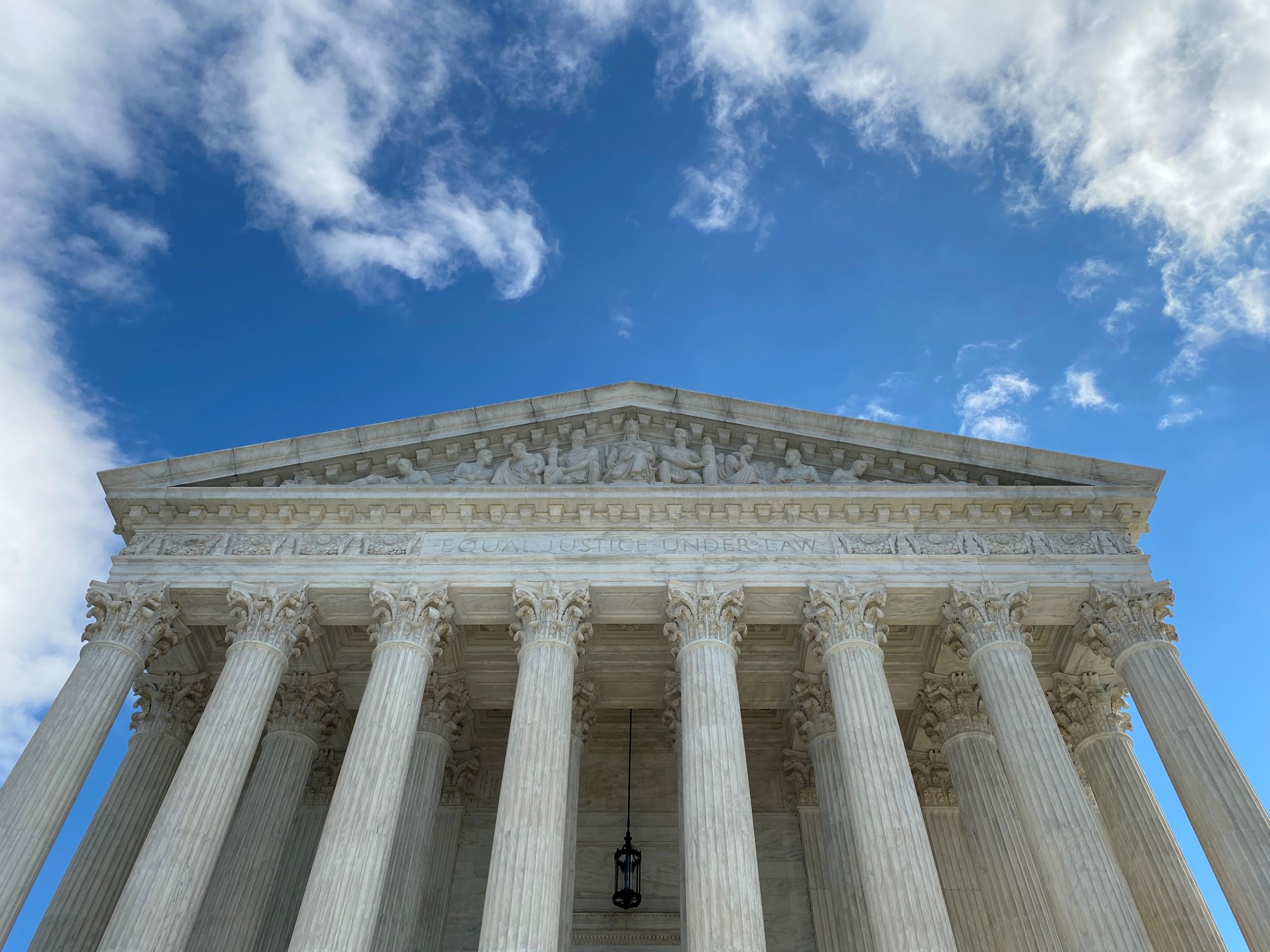
The two videos of the Supreme Court help highlight and showcase the inside of the Supreme Court and the experience of the judges and others. The videos show how the supreme court is important but also the mini details that explore intriguing details like how the president tries to control the Supreme Court by nominating a judge, or the process of choosing a case to take and their verdict and opinion on the matter. This is important to discuss as the supreme court maintains its power from the people so understanding all these details matter.

The Supreme Court is a busy endeavor as the court receives five thousand cases yearly although only 100 tend to be accepted. The Court members mentioned how them not taking your case doesn't mean they ruled against you. The reason for this is because the members of the court feel like there was enough in the case for them to intervene as there could others that need more attention.
When the Supreme Court takes a case, it is open to the public in which nine members listen to each lawyer's side for thirty minutes. This case tends to be more difficult for lawyers as they have to speak in front of nine judges that will bounce their ideas to each other in the form of questions to the lawyer. After the court votes on the verdict one member from the majority writes a reasoning for the decision. This is crucial as the sets a precedent for future similar cases, and it could be used as a reference. Ultimately, all verdicts and reasoning are released by late June as that's the end of term for the Supreme Court.
Thursday, July 2, 2026
The Bible is Pro Slavery | Preston and Francesca
Christianity is the most well-known religion throughout the world, and it has garnered many followers who follows it's preaching. Although not all preachings are taught and followed as slavery is one of the preachings to ignore/discard. The problem is that slavery should be continued as multiple times in the bible there are scriptures which show the god has allowed slavery. The Legacy of the Bible in Justifying Slavery - Bible Odyssey

Another example of the bible being pro slavery is in Leviticus when this is stated “Your male and female slaves are to come from nations around you; from them you may buy slaves. You may also buy some of the temporary residents living among you and members of their clans born in your country, and they will become your property. (Leviticus 25:44 -46)” Leviticus 25:44-46 NIV - “‘Your male and female slaves are - Bible Gateway This proves that slavery should still be continue in America because the scripture references a slave trade and how we can buy slaves and they will become our property. Ultimately, the bible is pro slavery, and we should listen to the old scriptures and continue God’s work.
The Bible is against Slavery

The Bible does not condone the act
of slavery. In just the second book of the Bible, we see the one of the first instances
where slavery is discussed: “Whoever steals a man and sells him, and anyone
found in possession of him, shall be put to death,” (Exodus 21:16). There is no mercy involved with slavery,
and God, who is plenty merciful, is against the act entirely. Another example appears
later in the fifth book of the Bible, Deuteronomy, and says, "If a man is
found stealing one of his brothers of the people of Israel, and if he treats
him as a slave or sells him, then that thief shall die. So, you shall purge the evil from your midst,” (Deuteronomy 24:7). The Bible tells us to “love thy neighbor”,
and to treat others how we want to be treated. In truly interpreting those
messages, we find that slavery is unacceptable and punishable.